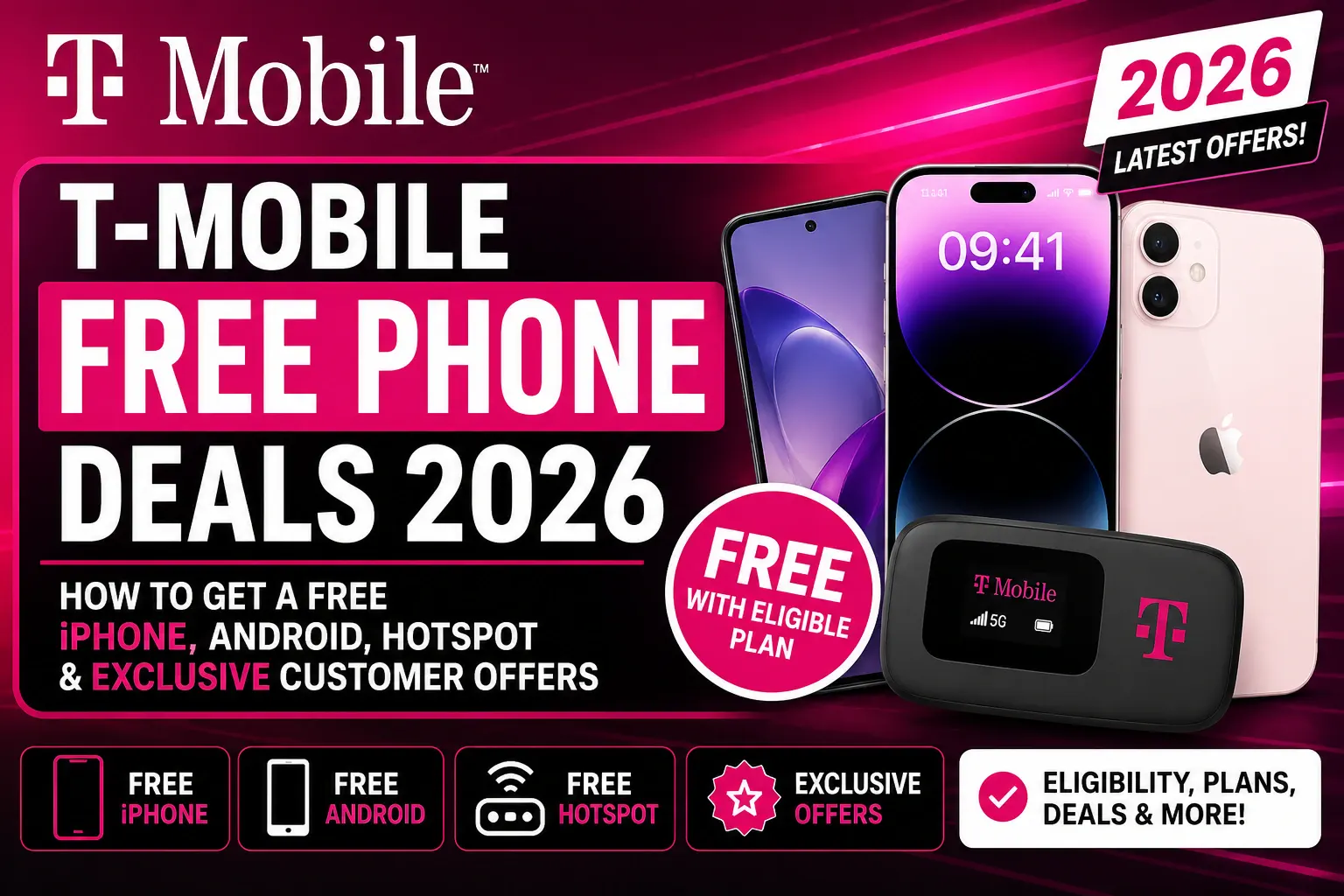

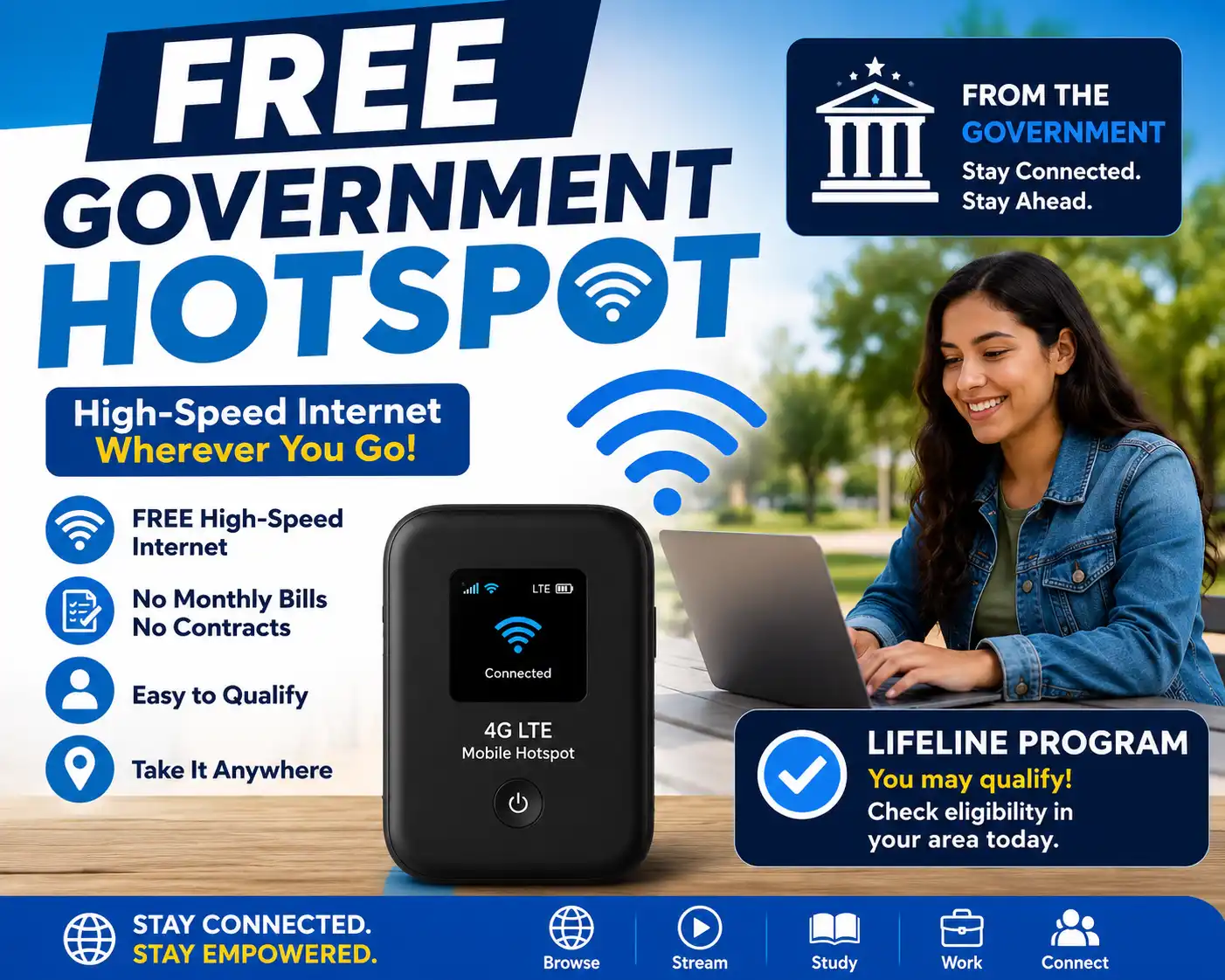
You can get free government hotspot devices via Project 10Million, Lifeline programs and Public Libraries & Nonprofits entities. However, it’s quite rare to get standalone hotspot devices and there are only three providers that offer it. But rest offers free mobile hotspot which is also beneficial if you are student, working person or freelancer.
The availability of a hotspot device depends on the state, eligibility and stock. We will list all the providers offering standalone devices along with mobile ones. You will also learn about their eligibility. We have also researched and answered your questions that are often left unanswered at forums. So scroll down and explore all the options before applying for any one of them.
Who is Eligible for a Free Hotspot Device in 2026?
You may qualify if you:
- Have income at or below 135% of the Federal Poverty Level
- Receive SNAP, Medicaid, SSI, TANF, FPH, or Veterans Pension
- Participate in Tribal assistance programs
- Receive a Federal Pell Grant or free/reduced-price school lunch benefits
- Are a US citizen or eligible legal resident with valid identification
How Can You Get Free Standalone Hotspot Devices?
There are three ways to get free standalone devices including lifeline providers, libraries and NPOs.
-
Providers Offering Free Standalone Hotspot Device
These providers occasionally offer dedicated hotspot devices (portable WiFi routers / pocket WiFi). Look at the table below to find device type, data limits and network:
| Provider | Device Type | Monthly Data (by Region) | Talk/Text | Network | Key Notes |
| T-Mobile (Project 10Million) | Dedicated hotspot (Franklin T10 + JEXtream RG2100) | Nationwide: 200GB/year free | Not included | T-Mobile 5G/LTE | Best structured student hotspot program |
| enTouch Wireless | Pocket WiFi /LTE hotspot (limited availability) | Standard States: 4.5GB +California: 6GB +Kentucky: 1GB–4.5GB+ Tribal Lands: 8GB–10GB+ | Unlimited | Regional LTE | One of few Lifeline providers with true hotspot devices |
| Q Link Wireless | Smartphone with hotspot capability (no consistent standalone device) | Most States: 4.5GB–10GB, California: 10GB+ (then reduced speeds) | Unlimited (at reduced speeds after cap) | T-Mobile network | . Standalone hotspot devices are not guaranteed but depend on availability and eligibility. |
-
Public Library Hotspot Lending Programs
Many public libraries help people stay connected by lending Wi-Fi hotspots or supporting affordable internet programs. While availability varies by location these programs are a great option if you need temporary internet access.
| Library | Device Offered | Loan Period | Who Can Apply | Cost | Rules |
| Los Angeles Public Library – Tech2go | Standalone mobile hotspot, and in some cases device bundles such as iPad Minis | Varies by branch/program availability | Library cardholders usually with an account in good standing | Free to borrow | Designed for households that need internet access. Hotspots allow users to connect laptops + tablets+ other Wi-Fi devices. Availability depends on branch inventory. |
| LA County Library | Portable standalone Wi-Fi hotspot kit | Up to 6 weeks | Adult library cardholders with a full access library card in good standing | Free to borrow | Devices may be disabled when overdue. Digital-only library cards may not qualify for hotspot checkout. Holds or waitlists may be required. |
| San Diego Public Library | Mobile hotspot kit | Usually 30 days / branch-based checkout period | Library users who complete the hotspot user agreement | Free to borrow | Often first come, first served so users should call the local branch +check the catalog before visiting. |
| Austin Public Library | Standalone 5G Wi-Fi hotspot kit with charger and cable | 3 weeks | Valid Austin Public Library cardholders | Free to borrow | No renewals+one hotspot per card and lost/damaged device fees may apply. Works where T-Mobile 5G/LTE coverage is available. |
| Other Local Public Libraries | Portable hotspot, pocket Wi-Fi, or “Library of Things” internet device | Usually 2–6 weeks | Local library cardholders | Usually free | Users should search the library catalog for hotspot, “Wi-Fi hotspot,” “Tech2Go,” “Connect & Go,” or “Library of Things.” |
-
Nonprofit and NGO Hotspot Support Programs
Several nonprofit organizations are working to improve internet access with supporting libraries, schools and community programs. Although many do not give hotspots directly to individuals but they fund or or lend it.
| Organization | Device or Support Offered | Direct access to device | Who They Usually Help | Cost / Data Structure | Availability |
| Mobile Citizen | Low-cost mobile hotspot service and devices for lending programs | Usually no | Schools+libraries + nonprofits + social welfare agencies | Low-cost annual service; often unlimited data through partner programs | Through partner organizations |
| Mobile Beacon | Hotspots +SIM cards +tablets + broadband support for digital inclusion programs | Usually no | Libraries+ schools+ nonprofits + healthcare groups, and community organizations | Discounted or donated devices through partner channels+ low-cost broadband service | Through approved partners |
| National Digital Inclusion Alliance (NDIA) | Digital inclusion guidance+ community resource + policy support | No | Digital equity groups+ local nonprofits +libraries, and community coalitions | Not a device giveaway program | Nationwide resources |
| Computers 2 Kids (C2K) | Refurbished computers plus affordable internet support | Not usually for standalone hotspots | Low-income families, students+community members | Low-cost devices and connectivity support | Selected local programs |
| Local Community Centers | Hotspot lending +connectivity grants or referral support | Sometimes | Low-income households, job seeker+students, seniors+ people without home internet | Usually free or subsidized | Varies by local funding |
| Adult Education Centers | Hotspots for online classes, job search, or training access | Sometimes | Adult learners, job seekers+ workforce training participants | Usually free during enrollment | During active enrollment |
Free Mobile Hotspot Providers
There are multiple providers that offer free mobile hotspot instead of standalone device. So if you lose the opportunity for a hotspot device then make sure to get a mobile hotspot. Below is list of providers offering mobile hotspots along with data bundles, talk and text details:
| Provider | Device / Hotspot Type | Data Bundle | Talk/Text | Network | Key Notes |
| SafeLink Wireless | Free Android smartphone +hotspot capability | Most States: 4.5GB–10GB, California: 10GB, Tribal Lands: often unlimited or up to 20GB, Maryland: up to 15GB hotspot/data | Unlimited or at least 1,000 minutes+unlimited texts | Verizon network | Good option for rural areas because it uses Verizon coverage. |
| Assurance Wireless | Free smartphone +hotspot capability | Most States: 10GB, California: 12GB, Data Peace of Mind add-on: up to 12GB or lower-speed data, Top-ups: 100MB–5GB | Unlimited talk and text | T-Mobile network | Better for basic browsing, messaging and light hotspot use. |
| AirTalk Wireless | Free/discounted smartphone or BYOD hotspot plan | California: 10GB standard or 25GB Data Boost, Kentucky: 6GB standard or 16GB Data Boost, | Unlimited talk and text | AT&T network | Offers higher data caps in some states. Data Boost plans are usually BYOD |
| TruConnect | Free smartphone | National Lifeline: 4.5GB, California LifeLine: 6GB, Tribal Lifeline: 10GB | Unlimited talk and text | T-Mobile network | For basic internet use, email, messaging, and light hotspot sharing. |
| Cliq Mobile | 5G home internet +mobile hotspot-style modem or router | Standard: 4.5GB, California: 6GB+ with state subsidy | Limited or plan-based | Varies by area | More suitable for home-style internet use than regular smartphone tethering. |
| StandUp Wireless | Free smartphone +hotspot capability | Most States: 4.5GB, California LifeLine: up to 12GB, Tribal Lands: higher data caps or unlimited depending on subsidy | Most States: 1,000 minutes and unlimited texts | T-Mobile network | Best for low-cost connectivity rather than heavy hotspot usage. |
| TAG Mobile | Smartphone hotspot or occasional 5G hotspot device | Lifeline Free Plan: up to about 16GB, Silver: 5GB hotspot data, Gold: 10GB hotspot data, Platinum: 20GB hotspot data | Unlimited or plan-based | Mixed networks | Some plans include dedicated hotspot data, but device availability depends on state |
| Access Wireless | Free smartphone with hotspot/tethering support | Most U.S. States: 4.5GB–5GB, California: around 6GB, Tribal Lands: up to 10GB | Unlimited or plan-based | Regional / partner network coverage | for light browsing, messaging and occasional hotspot use. |
| Cintex Wireless | Free smartphone with hotspot support+occasional hotspot box during promotions | Standard Lifeline: 4.5GB, California: 4.5GB 5G+ high-speed data, Tribal Lands: up to unlimited data in some areas | At least 1,000 minutes + unlimited texts | AT&T network | Usually provides smartphone hotspot support not a guaranteed standalone hotspot box. |
Conclusion
The hotspot programs help low income families, students, seniors and job seekers to get benefits. But not every provider offers a standalone hotspot device. Most Lifeline providers give free smartphones with hotspot capability.
While only a few programs provide dedicated Wi-Fi devices. Their data limits, coverage and eligibility vary by state, provider and available funding. Plus, public libraries and nonprofits can also be useful options for borrowing hotspot devices when carrier programs are limited.
FAQs
Can I get a free hotspot device without a phone?
Yes, but it is less common. Most Lifeline providers offer a free smartphone with hotspot capability instead of a separate hotspot device.
Do free hotspot devices come with unlimited internet?
Most free hotspot programs include a limited amount of high-speed data. After you use that data then your speed may be reduced.
Can students get a free hotspot for online classes?
Yes, students may qualify through school based programs, public libraries or T-Mobile’s Project 10Million.
What documents do I need to apply for a free hotspot?
You may need proof of identity, proof of address and proof of eligibility. This can include SNAP, Medicaid, SSI, Federal Public Housing Assistance, Tribal benefits or income documents. But requirements vary by provider and state.